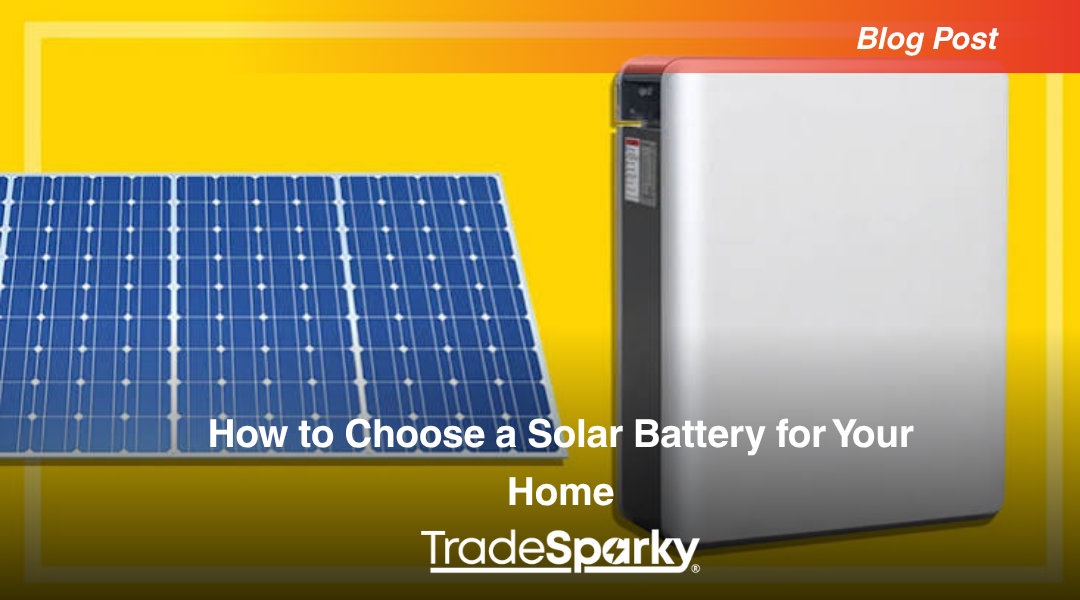
Choosing a solar battery involves more than simply comparing storage capacity and price. The right system needs to match your household electricity use, solar generation, inverter setup and the way you intend to use stored energy.
By comparing the specifications that actually affect everyday performance, you can narrow down the options and avoid paying for capacity or features that you are unlikely to use.
Choose the Right Battery Capacity
Battery capacity is measured in kilowatt-hours or kWh and indicates how much electrical energy the battery can store.
A larger capacity gives you more stored energy, but bigger is not automatically better. An oversized battery may regularly remain partly unused, while an undersized system could run empty before your household's main period of evening electricity consumption.
Your electricity bills, smart meter data and solar generation are useful starting points when estimating capacity. Our guide to what size solar battery you need explains this in more detail.
Check Usable Capacity
The advertised capacity and the amount of energy actually available for everyday use are not always identical.
Battery management systems normally prevent a battery from being completely discharged because repeatedly running cells to zero can shorten their working life. This means it is worth checking the manufacturer's stated usable capacity rather than comparing products purely by their headline kWh figure.
Two batteries advertised with similar total capacities can therefore provide different amounts of usable stored electricity.
Consider Battery Power Output
Capacity tells you how much electricity can be stored, while power output determines how quickly that electricity can be supplied.
This distinction becomes important when several high-demand appliances are operating at the same time. A battery may contain plenty of stored energy but still have a limit on how much power it can deliver simultaneously.
When comparing solar batteries, look at both storage capacity in kWh and output in kW rather than treating battery size as the only important specification.
Check Compatibility With Your Solar System
If you already have solar panels, make sure the battery system is compatible with your existing inverter and PV installation.
Some installations use an inverter designed to manage both solar generation and battery storage, while retrofit battery systems may use a separate arrangement.
Compatibility can affect equipment requirements, installation complexity and overall cost, so this should be established before purchasing the battery itself.
If you are still deciding whether storage makes financial sense, our guide to whether solar batteries are worth it in the UK covers potential savings, tariffs and other considerations.
Compare Warranty and Expected Lifespan
A home battery is a long-term purchase, making warranty cover particularly important.
Energy Saving Trust currently estimates that a typical home storage battery lasts around 10 to 12 years, although actual lifespan varies according to the battery, operating conditions and how it is used.
When comparing products, check the warranty period alongside any limits on charge cycles, energy throughput or remaining battery capacity. A longer headline warranty may not necessarily offer better protection if its conditions are more restrictive.
Decide Whether You Need Backup Power
Do not assume that installing solar batteries automatically means your home will continue operating during a power cut.
Many standard systems disconnect when there is a grid outage unless they have been designed and configured specifically to provide backup power.
If backup electricity is important to you, check whether the battery supports this feature and what additional equipment may be required.
Think About How You Will Charge the Battery
Solar panels are only one potential charging source.
Many modern home batteries can also charge using grid electricity, which can be particularly useful with time-of-use tariffs. This allows electricity to be stored during cheaper periods and used when grid prices are higher.
If the basics of charging, storage and discharge are unfamiliar, our guide explaining what a solar battery is and how battery storage works provides a useful introduction.
Compare the Whole System Rather Than One Specification
The best solar battery for your home is not necessarily the product with the highest capacity, greatest output or lowest purchase price.
Capacity, usable storage, power output, compatibility, warranty and intended use all need to work together. Installation quality is equally important, with Energy Saving Trust recommending experienced professionals and MCS-certified installers when integrating battery storage with renewable energy systems.
Once you understand the specifications your installation requires, you can compare our range of solar batteries to find storage options suited to different household energy requirements.

















































 Cable & Cable Installations
 Lighting & Lamps
 Wiring Accessories
 Cable Accessories
 Power Distribution
 Heat & Vent
 Energy Controls
 Fire & Security
 Tools & Fixings
 Test Equipment
 Site Equipment & Lighting
 EV Charging
 Solar
Solar


.png)