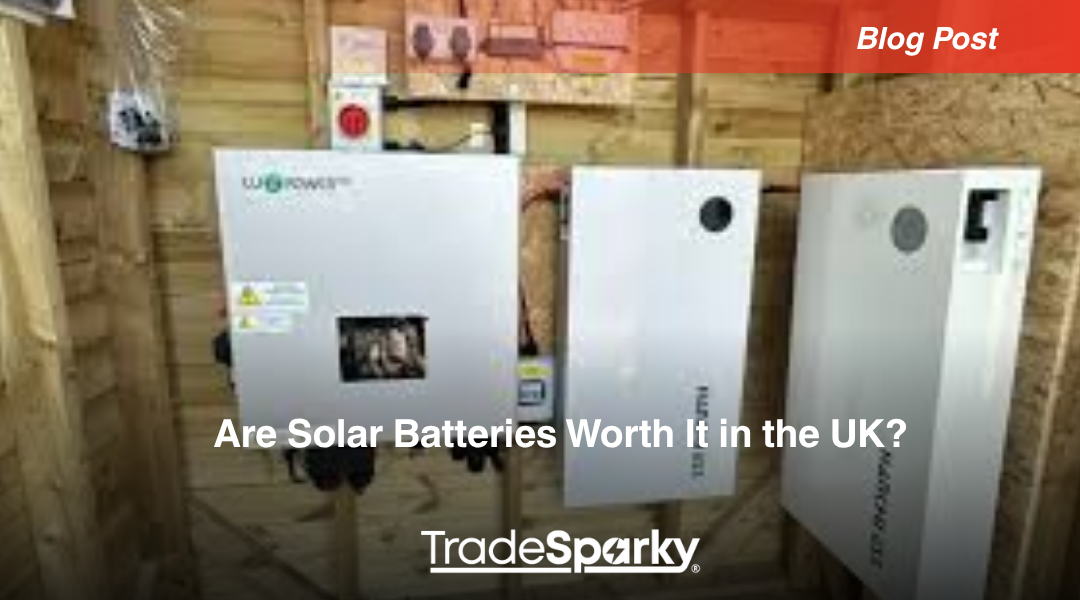
Solar batteries can help households use more of the electricity generated by their solar panels, reduce reliance on the grid and take advantage of cheaper electricity tariffs.
However, whether a solar battery is worth buying depends on how much electricity you use, when you use it and how effectively the battery can be integrated into your home energy system.
For some households, battery storage can significantly improve the way solar electricity is used. For others, the upfront cost may take longer to recover through energy bill savings alone.
How Can a Solar Battery Save You Money?
Solar panels often generate their highest output during the middle of the day, when household electricity demand may be relatively low. Without battery storage, surplus electricity can be exported to the grid.
A battery allows some of this excess generation to be stored and used later, such as during the evening when solar output has fallen but electricity consumption may increase.
If you are unfamiliar with the process, our guide explaining what a solar battery is and how battery storage works covers how electricity moves between solar panels, the battery, your home and the grid.
The more stored solar electricity you can use yourself, the less electricity you may need to purchase from your supplier.
Can You Save Money Without Solar Panels?
A home battery does not necessarily need to be paired with solar panels.
Many modern systems can charge using grid electricity, making them potentially useful alongside time-of-use tariffs. These tariffs offer different electricity prices at different times of day.
A battery can potentially charge when electricity is cheaper before supplying stored energy during more expensive periods. Whether this produces worthwhile savings depends on the difference between tariff rates, household consumption and the efficiency of the battery system.
Households with higher electricity demand may have greater opportunities to benefit from this type of energy shifting.
What About Selling Solar Electricity Back to the Grid?
Battery storage is not the only way to gain value from surplus solar generation.
Under the Smart Export Guarantee, eligible households can receive payment from electricity suppliers for renewable electricity exported to the grid. Individual suppliers determine their own export rates and tariff conditions.
This means storing every available unit of solar electricity is not automatically the most profitable option. A household with an attractive export tariff may sometimes receive good value from exporting surplus electricity instead.
When considering a battery, it is therefore important to compare the value of storing and using electricity yourself with the amount you could receive for exporting it.
How Much Does a Solar Battery Cost?
Battery prices vary considerably depending on storage capacity, power output, manufacturer and the other equipment required for the installation.
The cost should therefore be considered alongside the battery's expected lifespan and the savings it may produce during that period. Energy Saving Trust currently estimates a typical battery lifespan at around 10 to 12 years, although this varies between products and according to how the battery is used.
Capacity also has a major effect on cost. Installing far more storage than your household can regularly use may make it harder to achieve a worthwhile financial return.
Our guide to what size solar battery you need will explain how electricity consumption, solar generation and usage patterns can help determine an appropriate capacity.
What Else Makes Battery Storage Worth Considering?
Financial payback is only one reason households choose battery storage.
A suitable system can help you use more of your own renewable electricity, reduce the amount of electricity imported during expensive tariff periods and provide greater flexibility as electricity tariffs change.
Battery storage may also become increasingly useful if household electricity demand grows through technologies such as electric vehicles or heat pumps.
However, a standard solar battery should not automatically be assumed to provide backup electricity during a power cut. Backup operation normally requires a system specifically designed and configured for that purpose.
So Are Solar Batteries Worth It?
For many UK households, a solar battery can be a useful addition to a home energy system, particularly where there is surplus solar generation, significant evening electricity use or access to a suitable time-of-use tariff.
The financial case is less straightforward when electricity consumption is low or when a household already receives an attractive rate for exporting surplus solar energy.
The key is choosing a battery that matches the property rather than simply buying the largest capacity available.
If battery storage suits the way your household generates and uses electricity, you can compare our range of solar batteries to explore the different capacities and storage options available.






















































 Cable & Cable Installations
 Lighting & Lamps
 Wiring Accessories
 Cable Accessories
 Power Distribution
 Heat & Vent
 Energy Controls
 Fire & Security
 Tools & Fixings
 Test Equipment
 Site Equipment & Lighting
 EV Charging
 Solar
Solar


.png)