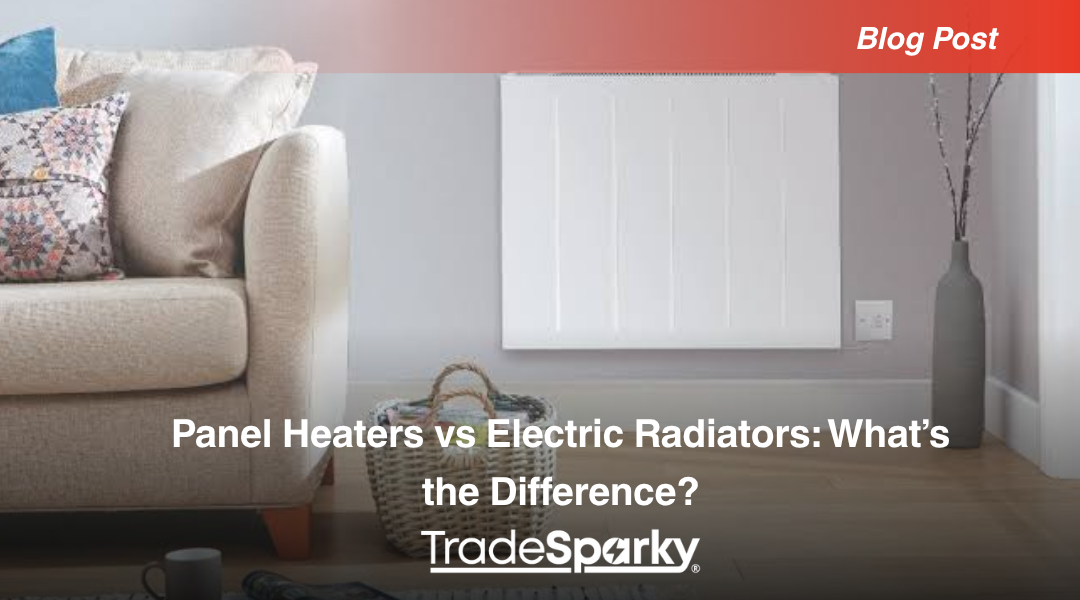
Panel heaters and electric radiators both use electricity to provide direct room heating, but they do not necessarily deliver that heat in the same way.
Differences in construction, heat distribution, thermal retention, price and intended use can make one type more suitable than the other for a particular room.
Understanding those differences can help you choose the right electric heating solution rather than assuming the two terms describe exactly the same product.
What Is a Panel Heater?
Panel heaters are usually a slim electric heater that primarily warms the air through convection.
An internal heating element warms cooler air entering the heater. As the air becomes warmer it rises and circulates through the room, gradually increasing the overall air temperature.
Panel heaters tend to have relatively lightweight construction and respond quickly when switched on. They are commonly used for individual rooms, supplementary heating and spaces where straightforward on-demand warmth is required.
For a more detailed explanation, our guide to what a panel heater is and how it works covers the heating process, controls and common applications.
What Is an Electric Radiator?
Electric radiators also convert electricity directly into heat but can use a different method of distributing that warmth.
Depending on the design, an electric radiator may contain a heating element combined with oil, ceramic material or another thermal medium. Many provide a mixture of convection and radiant warmth rather than relying predominantly on heating the surrounding air.
The thermal mass within some electric radiators can also retain warmth for a period after the heating element switches off.
This generally makes electric radiators heavier and potentially slower to respond than lightweight panel heaters, although the exact characteristics vary considerably between products.
Are Electric Radiators More Efficient Than Panel Heaters?
This is an area where terminology can be misleading.
Both are forms of direct electric resistance heating and essentially convert the electricity they consume into heat within the room. An electric radiator does not magically produce substantially more heat from each unit of electricity simply because it contains oil or another heating material.
The important differences are how the heat is delivered, how accurately the heater is controlled and how the room retains that heat.
Running costs therefore depend heavily on heater wattage, electricity prices, room heat loss and operating time rather than the product simply being labelled a radiator or panel heater.
Our guide to whether panel heaters are expensive to run explains how wattage, thermostats and usage affect electricity consumption in more detail.
Which Heats a Room Faster?
Panel heaters can provide a fast response because the electrical element begins warming circulating air soon after the heater is switched on.
This makes them useful for rooms that need heating relatively quickly for shorter periods, such as a home office, bedroom or occasional-use room.
Electric radiators may take longer to warm fully where the design includes significant thermal mass. However, that stored warmth can continue being released after the heating element cycles off.
Whether rapid warm-up or greater heat retention is more useful depends on how the room is normally occupied.
Which Is Cheaper to Buy?
Panel heaters are generally among the simpler and more affordable forms of fixed electric room heating.
Their lightweight construction and straightforward operation can make them particularly attractive where several rooms require independent electric heaters or where installing a wet central heating system would be impractical.
Electric radiators can carry a higher initial purchase price, particularly when they incorporate thermal materials and more substantial construction.
The purchase price should therefore be considered alongside how frequently the heater will be used and what level of heating performance the room requires.
Do They Need Different Wattages?
Regardless of the heater type, output needs to be appropriate for the room.
Floor area, insulation, ceiling height, glazing and external walls all influence how much heat is required. Choosing an undersized heater can leave it operating for long periods without reaching the desired temperature.
Our guide to what size panel heater you need explains how to estimate the required wattage and why heat loss matters when selecting an electric heater.
Which Should You Choose?
Panel heaters can be particularly suitable when you want slim, affordable and responsive electric heating for individual rooms or intermittent use.
Electric radiators may appeal where longer periods of heating and greater thermal retention are preferred, although product designs vary and neither option automatically guarantees lower energy bills.
The best choice ultimately depends on the room, how frequently it is occupied and the heating behaviour you need.
If responsive direct electric heating suits your requirements, explore our range of panel heaters across different wattages, sizes and control options to find a suitable model for your space.



















































 Cable & Cable Installations
 Lighting & Lamps
 Wiring Accessories
 Cable Accessories
 Power Distribution
 Heat & Vent
 Energy Controls
 Fire & Security
 Tools & Fixings
 Test Equipment
 Site Equipment & Lighting
 EV Charging
 Solar
Solar


.png)