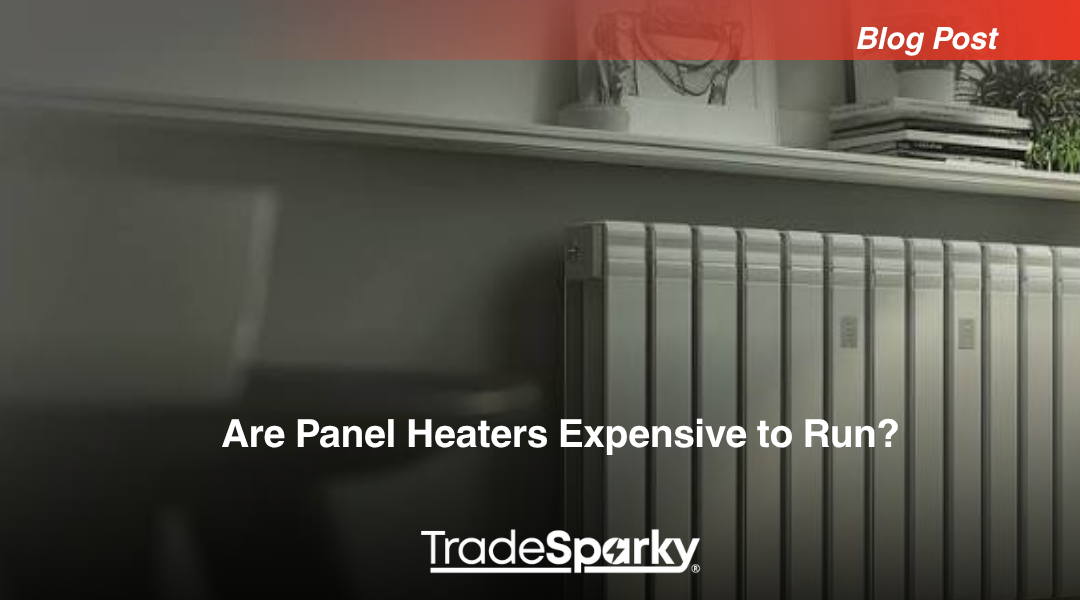
Panel heaters are relatively inexpensive to buy and simple to install, but their running costs can become significant if they are used for long periods.
Because they use electricity directly to produce heat, the amount you pay depends mainly on the heater's wattage, your electricity tariff and how long it operates.
That does not mean panel heaters are always expensive to use. In the right setting, particularly for heating individual rooms for limited periods, they can provide a practical and controllable solution.
How Much Does a Panel Heater Cost to Run?
The simplest way to estimate running cost is:
Heater power in kW × electricity price per kWh × hours used
For example, a 1kW panel heater running continuously for one hour uses approximately 1kWh of electricity.
If electricity costs 26p per kWh, that works out at approximately:
-
500W panel heater: 13p per hour
-
1kW panel heater: 26p per hour
-
1.5kW panel heater: 39p per hour
-
2kW panel heater: 52p per hour
These figures assume the heater operates continuously at full output for the entire hour. In normal use, a thermostat may switch the heating element on and off once the required room temperature has been reached.
Does a Thermostat Reduce Running Costs?
A thermostat does not make the heating element itself more efficient, but it can prevent unnecessary energy use.
Once the room reaches the selected temperature, a thermostatically controlled panel heater can stop heating until the temperature falls again. This means a 2kW heater will not necessarily consume 2kWh every hour throughout the day.
Timers and programmable schedules can also help by preventing rooms from being heated when nobody is using them.
If you are unfamiliar with how these heaters operate, our guide to what a panel heater is and how it works explains how convection heating, thermostats and controls work together.
Are Panel Heaters Efficient?
Electric panel heaters convert almost all of the electricity they consume into heat at the point of use.
However, high conversion efficiency does not necessarily mean low running costs.
Electricity is relatively expensive compared with some other household heating fuels, so direct electric heating can become costly when used continuously throughout an entire property.
Panel heaters are therefore often better suited to situations where individual rooms need heat for limited periods rather than serving as permanent whole-home heating in a poorly insulated property.
Does Heater Size Affect Running Cost?
Yes. A higher wattage heater can use more electricity while its heating element is operating.
However, simply choosing the smallest possible heater is not always the cheapest approach.
A heater that is undersized for the room may need to run continuously while still struggling to reach the required temperature. A correctly sized heater may warm the room more effectively before the thermostat begins cycling the heating element.
Room size, insulation, glazing, ceiling height and external walls can all affect the output required.
Choosing the correct output can also affect how effectively a room is heated, so our guide to what size panel heater you need explains how room dimensions, insulation and heat loss influence the wattage required.
How Can You Keep Panel Heater Running Costs Down?
The most effective approach is to avoid heating rooms unnecessarily.
Use the thermostat to maintain a comfortable temperature rather than leaving the heater at maximum output. Timers and weekly programmes can also ensure heating only operates when the room is occupied.
Insulation matters too. A well-insulated room retains heat for longer, meaning the heater should need to operate less frequently to maintain the desired temperature.
Keeping doors and windows closed while heating and addressing obvious draughts can also reduce heat loss.
Are Panel Heaters Cheaper Than Central Heating?
Not necessarily. Direct electric heating is generally more expensive per unit of heat than heating provided by a modern gas boiler, while heat pumps can produce considerably more heat from each unit of electricity consumed.
However, panel heaters have other advantages. They require no boiler or pipework, have relatively low installation costs and allow individual rooms to be heated independently.
This can make them attractive for smaller properties, occasional-use rooms or situations where extending an existing central heating system would be impractical.
Are Panel Heaters Worth Using?
Panel heaters make the most sense when they are correctly sized, well controlled and used where heat is required rather than being left running unnecessarily throughout a property.
Their low purchase cost and straightforward installation need to be balanced against the cost of electricity, particularly if they are expected to operate for many hours each day.
If direct electric heating suits your property, compare our range of panel heaters across different wattages, sizes and control options to find a suitable model for each room.







































 Cable & Cable Installations
 Lighting & Lamps
 Wiring Accessories
 Cable Accessories
 Power Distribution
 Heat & Vent
 Energy Controls
 Fire & Security
 Tools & Fixings
 Test Equipment
 Site Equipment & Lighting
 EV Charging
 Solar
Solar

.png)