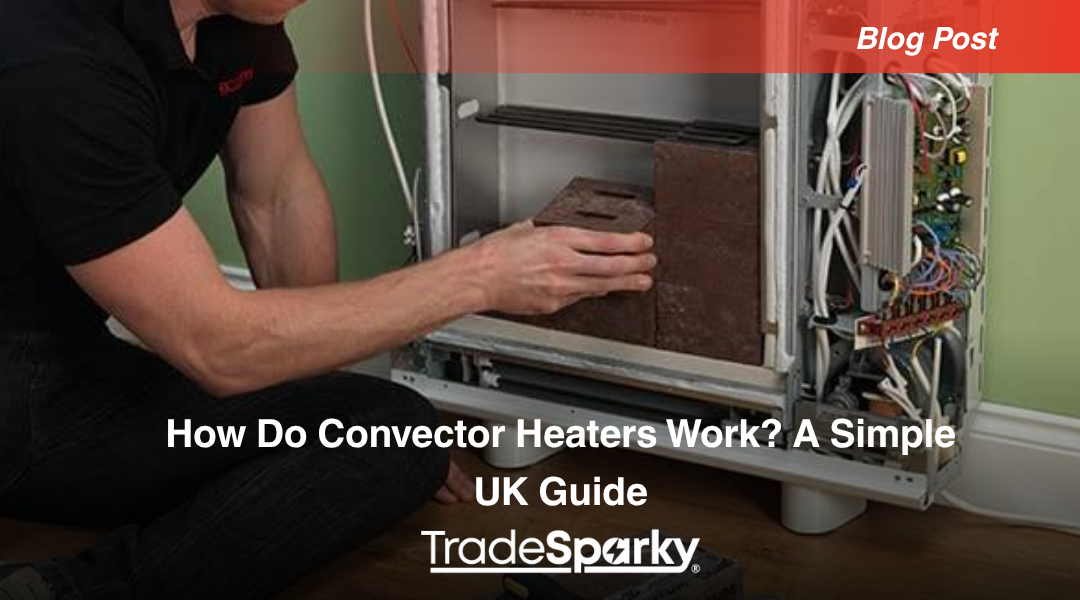
Convector heaters are a straightforward and convenient way to warm a room, whether you need additional heat on a cold evening or a dedicated heating solution for a space without central heating.
But how does a convector heater actually produce warmth and how is it different from a fan heater, radiator or other electric heater?
Understanding how convection works can make it easier to decide whether this type of heater is right for your room and how to use it effectively.
What Is a Convector Heater?
A convector heater is an electric heater designed primarily to warm the air within a room. Rather than directing heat at a particular person or object, it creates a continuous circulation of warmer and cooler air.
Most models contain an electrical heating element inside a relatively lightweight casing. Cooler room air enters the heater, passes across the heating element and becomes warmer before rising back into the room.
This simple process can gradually raise the temperature throughout the space.
If you are considering one for your home, office or another indoor space, you can explore our range of convector heaters to compare the different outputs and control options available.
How Does Convection Heating Work?
The principle behind a convector heater is natural convection.
Warm air is less dense than cooler air, so when air passes over the heater's element it warms and rises. As that warmer air moves upwards into the room, cooler air moves down and towards the heater to replace it.
That cooler air is then heated and the process repeats.
Over time, these convection currents circulate warm air throughout the room rather than concentrating all the heat immediately in front of the appliance.
This is one reason convector heaters are particularly useful when you want to raise the general temperature of an enclosed room rather than simply warm yourself for a few minutes.
Do Convector Heaters Use a Fan?
A standard convector heater does not need a fan to circulate warm air. Natural convection does the work, which means many models operate extremely quietly.
Some convector heaters do include an additional fan or turbo function. The fan helps move heated air away from the appliance more quickly, which can reduce the time it takes for warmth to spread around a cold room.
However, the basic heating principle remains the same.
What Does the Thermostat Do?
Many modern convector heaters include a thermostat that monitors room temperature.
Rather than running continuously at full output, the heater can switch or regulate its heating element as the room approaches the selected temperature. Once the temperature drops again, the heater can begin heating once more.
This makes the controls just as important as the heating element itself.
Timers and programmable controls can provide further flexibility by allowing the heater to operate only when heat is actually required rather than being left switched on unnecessarily.
Where Do Convector Heaters Work Best?
Because they heat the room air, convector heaters tend to work best in reasonably well-insulated enclosed spaces where warm air can be retained.
They are commonly used in bedrooms, living rooms, home offices, conservatories and spare rooms as either supplementary or occasional heating.
They can also be particularly useful where extending an existing central heating system would be impractical.
A very draughty room may be more difficult to heat effectively because the warmed air can escape and continually be replaced by colder air from outside.
Convector Heater vs Radiant Heater
The main difference is what each type of heater is trying to warm.
A radiant heater directs thermal energy towards people and objects in front of it. This can produce an immediate feeling of warmth but may not heat the entire room evenly.
A convector heater concentrates on warming and circulating the air, making it better suited to raising the overall room temperature over a period of time.
Neither approach is automatically better. The right choice depends on whether you want quick localised warmth or more general room heating.
Are Convector Heaters Efficient?
Electric convector heaters convert the electricity they use into heat at the point of use, as other direct electric resistance heaters do. However, efficiency should not be confused with running cost.
A more powerful heater consumes more electricity while operating, while factors such as insulation, room size, thermostat settings and how long the heater runs will all influence the amount of electricity used.
Choosing an appropriately sized heater and making sensible use of thermostatic and timer controls is therefore more useful than simply looking for claims about efficiency.
Choosing the Right Convector Heater
Convector heaters are simple in principle, but there can be significant differences between models when it comes to heat output, controls, mounting options and additional features.
Before choosing one, consider the size of the room, how well it retains heat and whether the heater will be used occasionally or regularly.
When correctly matched to the space, a convector heater provides a quiet, controllable and convenient electric heating system to bring comfortable warmth into rooms that need it.















































 Cable & Cable Installations
 Lighting & Lamps
 Wiring Accessories
 Cable Accessories
 Power Distribution
 Heat & Vent
 Energy Controls
 Fire & Security
 Tools & Fixings
 Test Equipment
 Site Equipment & Lighting
 EV Charging
 Solar
Solar

.png)