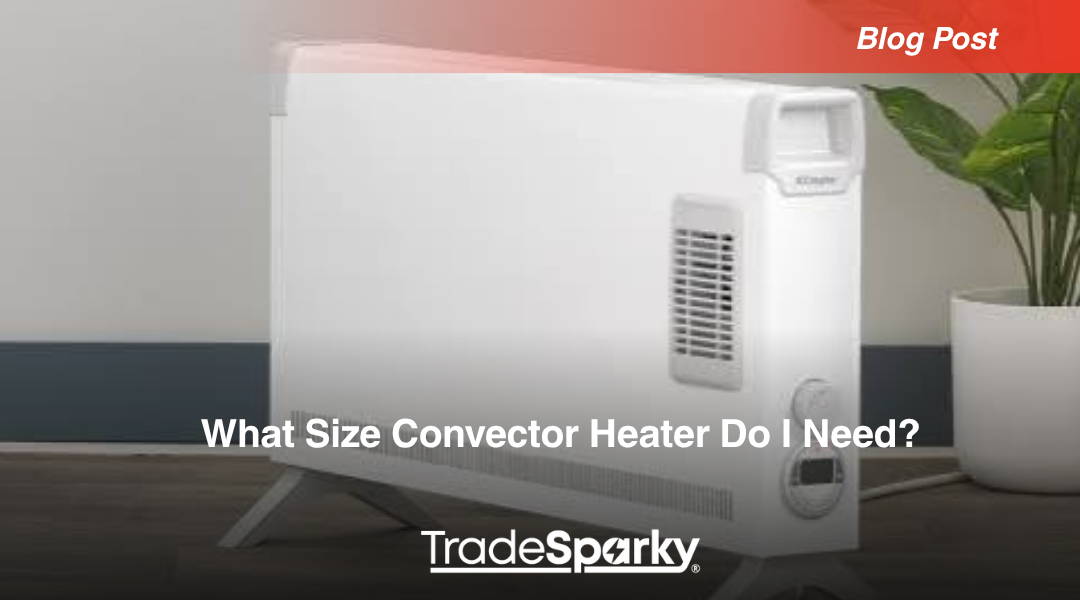
Choosing the right size convector heater is important if you want a room to warm up comfortably without relying on an appliance that is either underpowered or unnecessarily large.
Heater output is usually shown in kilowatts, with common domestic models ranging from around 1kW to 3kW, but room size alone does not tell the whole story.
The correct output depends on how much heat the room loses as well as how large the space is.
Why Heater Size Matters
A convector heater works by warming the surrounding air and allowing that warmer air to circulate through the room.
If the heater does not provide enough output for the space, it may struggle to raise the room to the desired temperature, particularly during colder weather. The heating element can then spend long periods operating as it attempts to compensate for continuing heat loss.
Choosing the largest heater available is not automatically the answer either.
A properly sized heater should provide enough output to meet the room's heating requirement while allowing the thermostat to regulate the temperature once comfortable conditions have been reached.
Is Room Size Enough to Choose a Heater?
Floor area is useful as a starting point, but it should not be the only measurement considered.
Two rooms with identical floor dimensions can have very different heating requirements. A modern bedroom with good insulation, double glazing and one external wall may retain warmth relatively easily. An older room with high ceilings, several external walls, large windows and noticeable draughts could require considerably more heat.
Room volume therefore matters as well as floor area.
You should consider the room's length, width and ceiling height alongside factors such as glazing, insulation and exposure to outside temperatures.
What Else Affects the Required Output?
Heat loss is one of the most important factors when sizing any electric heater.
A well-insulated room loses heat more slowly, meaning less energy is required to maintain a comfortable temperature. Poor insulation, single glazing and draughts allow heat to escape faster.
External walls also make a difference. A room surrounded largely by heated internal spaces will generally lose less heat than a corner room with two or three walls exposed to the outside.
Large windows and external doors can increase the heating requirement further, particularly in older properties.
Even the intended room temperature matters. A living room maintained at a comfortable temperature for several hours may have different requirements from a spare bedroom that only needs occasional background heat.
Is a 1kW Convector Heater Enough?
A 1kW heater may be suitable for a smaller room with relatively modest heat loss, but it should not be selected simply because the room appears small.
For larger spaces or rooms that lose heat quickly, outputs of 1.5kW, 2kW or more may be more appropriate.
Many portable convector heaters are available around the 2kW mark because this provides useful supplementary heating for a wide range of domestic rooms. Some larger units offer outputs of around 3kW for spaces with greater heating requirements.
The important point is to match the heater to the calculated requirement rather than choosing an output based on guesswork.
Should I Use a Watts-per-Square-Metre Rule?
You will sometimes see simple recommendations suggesting a fixed number of watts for every square metre of floor area.
These figures can be useful for very rough estimates, but they can also be misleading.
They do not fully account for ceiling height, insulation, glazing, external walls or the difference between an older draughty property and a modern energy-efficient home.
For a more reliable estimate, use a heating calculator that considers the characteristics of the individual room or arrange a proper heat-loss assessment where greater accuracy is required.
What Happens If a Heater Is Undersized?
An undersized heater may run for long periods without bringing the room to the required temperature.
This can leave the space feeling uncomfortable while also limiting the benefit of thermostatic control because the heater rarely reaches the point where it can reduce or stop its output.
An appropriately sized heater should be capable of reaching the required room temperature under expected conditions and then allowing its thermostat to maintain that temperature.
Do I Need More Than One Convector Heater?
In larger rooms, it can sometimes make more sense to distribute the required heating output across more than one heater.
This can help spread warmth more evenly, particularly in long rooms or spaces where a single appliance cannot be positioned effectively.
The combined output should still be based on the room's overall heating requirement rather than simply adding heaters until the room feels warm enough.
Choosing the Right Convector Heater
Start by measuring the room accurately and considering its insulation, ceiling height, windows, external walls and intended use.
Once you understand the approximate heat output required, you can compare convector heaters with suitable wattages and then consider the controls, thermostat, timer functions and mounting options that best suit the room.
Getting the sizing right from the beginning makes it much easier to achieve comfortable, responsive electrical heating system without asking the appliance to do more than it was designed for.

















































 Cable & Cable Installations
 Lighting & Lamps
 Wiring Accessories
 Cable Accessories
 Power Distribution
 Heat & Vent
 Energy Controls
 Fire & Security
 Tools & Fixings
 Test Equipment
 Site Equipment & Lighting
 EV Charging
 Solar
Solar


.png)