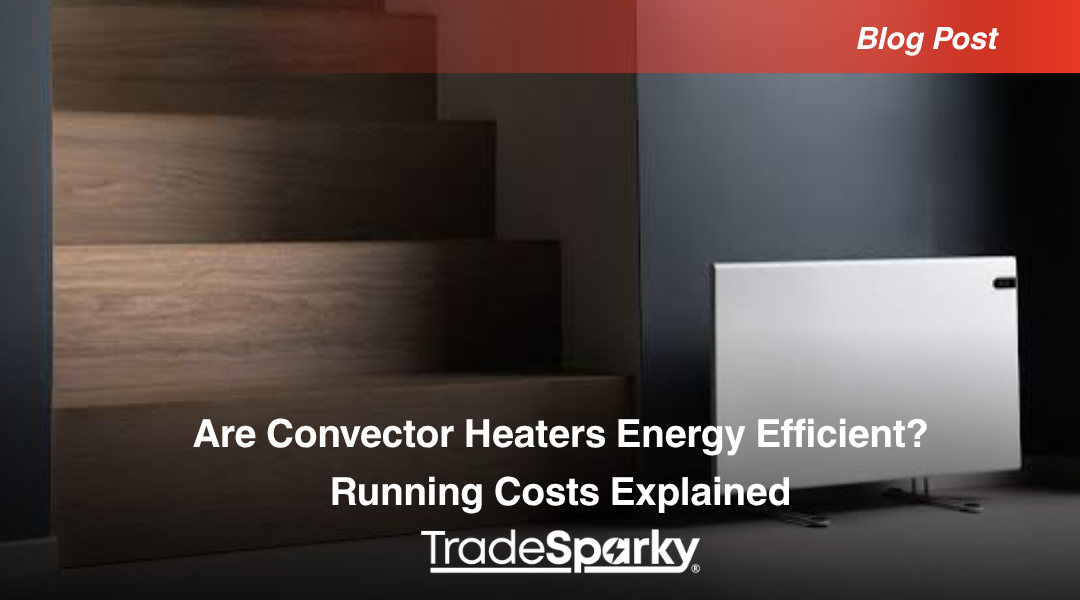
When choosing electric heating, one of the first questions is usually how much it will cost to run.
Convector heaters are popular because they are simple, responsive and easy to control, but understanding their energy use is important if you want to heat a room without creating an unnecessarily high electricity bill.
The good news is that calculating the potential running cost of a convector heater is relatively straightforward.
Are Convector Heaters Energy Efficient?
Electric convector heaters are effectively 100% efficient at the point of use. Almost all of the electricity consumed by the heating element is converted into heat within the room.
However, this does not mean a convector heater is automatically the cheapest way to heat a home.
Direct electric heating can be relatively expensive because electricity costs considerably more per unit than mains gas. Heat pumps are also capable of delivering considerably more heat energy than the electrical energy they consume, so a convector heater should not be described as the most efficient heating technology simply because it converts electricity directly into heat.
Where convector heaters can make sense is when you only need to heat a particular room or require additional warmth for a limited period.
How Much Does a Convector Heater Cost to Run?
Running cost depends primarily on two figures: the heater's power rating and the price you pay for electricity.
A typical convector heater might have a maximum output of 2kW. If it operates continuously at full power for one hour, it will use approximately 2kWh of electricity.
With UK electricity prices currently around 26p per kWh for many households on standard variable tariffs, that would cost approximately 52p for one hour at full power.
A 1kW heater operating continuously would use approximately half as much electricity, while a 1.5kW heater would sit somewhere between the two.
Electricity tariffs change regularly, however, so the easiest calculation is:
Heater output in kW × electricity price per kWh × hours used
Your own tariff should always be used when estimating the actual cost.
Does a 2kW Heater Always Use 2kW?
Not necessarily. The 2kW figure normally represents the heater's maximum electrical power while the heating element is operating. A heater with a thermostat should not need to remain at full power continuously once the room reaches the selected temperature.
Instead, the thermostat switches or regulates the heating element to maintain the required temperature.
This means a 2kW heater used for three hours will not necessarily consume 6kWh. The actual consumption depends on how frequently the heater needs to operate during that period.
A cold, poorly insulated room will lose heat faster and require more energy to maintain its temperature than a well-insulated room.
What Affects Convector Heater Running Costs?
Room size has an obvious influence, but it is only part of the picture.
Insulation levels, draughts, external walls, windows, ceiling height and the temperature outside can all affect how quickly heat escapes. The temperature selected on the thermostat also matters: maintaining an unnecessarily high room temperature requires the heater to work harder.
This is why choosing an appropriately sized heater is important. An underpowered heater may struggle to reach the required temperature, while choosing a much larger heater does not automatically make heating cheaper.
We cover this in more detail in our guide to what size convector heater you need.
Can Thermostats and Timers Reduce Electricity Use?
Good controls can make a considerable difference to how a convector heater is used.
A thermostat prevents the heater from continuing to produce full heat once the desired room temperature has been reached. A timer can also prevent heating an empty room or leaving the heater operating for longer than necessary.
Some modern models offer digital thermostats, programmable schedules and different heat settings, giving you greater control over when electricity is being consumed.
When comparing convector heaters, it is therefore worth looking beyond the maximum wattage and considering the controls supplied with the heater.
Are Convector Heaters Expensive to Run?
They can become expensive if they are used continuously for long periods, particularly as the main heating source for several rooms.
However, that does not mean they are always an expensive choice.
If you spend an evening working in one home office, for example, heating that particular room with a convector heater may make more sense than increasing the temperature throughout an otherwise empty house.
The key is targeted use.
Getting the Most From a Convector Heater
Convector heaters are at their most useful when they are properly matched to the room and controlled sensibly.
Avoid unnecessarily high thermostat settings, close doors and windows where appropriate and make use of timers rather than allowing the heater to run indefinitely.
Most importantly, remember that two direct electric heaters with the same power rating will broadly consume the same amount of electricity while running continuously at full output. What can make one heater more practical than another is how effectively it distributes heat and how well its thermostat and controls allow you to manage that energy use.
Used in the right situation, a convector heater can provide convenient, responsive room heating without using electricity unnecessarily.









































 Cable & Cable Installations
 Lighting & Lamps
 Wiring Accessories
 Cable Accessories
 Power Distribution
 Heat & Vent
 Energy Controls
 Fire & Security
 Tools & Fixings
 Test Equipment
 Site Equipment & Lighting
 EV Charging
 Solar
Solar

.png)