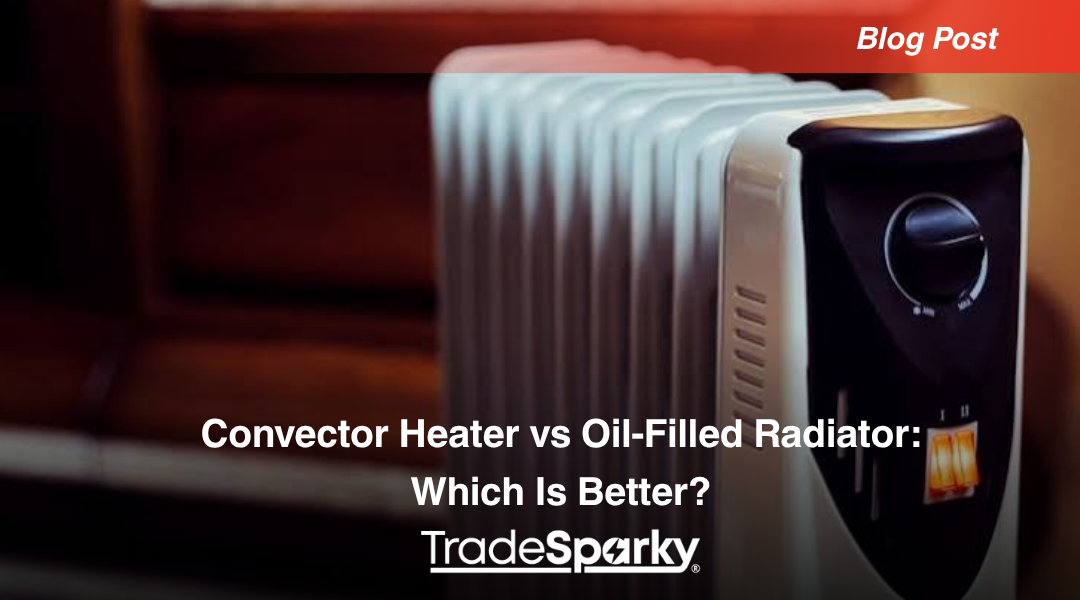
When choosing an electric heater for a bedroom, home office, living room or occasional-use space, two of the most common options are a convector heater and an oil-filled radiator.
Both convert electricity into heat, but they deliver that warmth differently, which can make one more suitable than the other depending on how and where you plan to use it.
The key difference is not simply which one is “more efficient”. It is how quickly the heater responds, how it distributes heat and how long you want the room to remain warm.
How Does a Convector Heater Work?
A convector heater works by warming the air around its internal heating element. As the air becomes warmer it rises, while cooler air moves towards the heater to replace it.
This creates a natural convection current that gradually circulates warm air throughout the room.
Because there is relatively little material to heat before warmth begins entering the room, convector heaters tend to respond quickly. This makes them particularly useful when you want a noticeable increase in room temperature without waiting for a heavy radiator to warm through.
Many models also include thermostats, multiple heat settings and timers, allowing the heater to respond to changing room temperatures rather than operating continuously.
How Does an Oil-Filled Radiator Work?
An oil-filled radiator contains a sealed thermal fluid that is heated by an electrical element.
The oil is not burned or replaced during normal use. Instead, it transfers heat around the metal body of the radiator, which then releases warmth into the room through a combination of convection and radiant heat.
Because the oil and metal casing have to reach temperature, these heaters usually take longer to warm up than a convector heater.
However, that additional thermal mass also means an oil-filled radiator can continue releasing some heat after the electrical element has switched off.
Which Heats a Room Faster?
If speed is the priority, a convector heater generally has the advantage.
With low thermal inertia, a convector can begin transferring heat into the room relatively quickly after it is switched on. This makes it well suited to spaces that are heated on demand, such as a home office used for a few hours, a spare bedroom or a living room that needs additional warmth in the evening.
An oil-filled radiator takes longer to reach its operating temperature.
For rooms that are going to remain heated for several hours, however, that slower response may be less important.
Which Is Cheaper to Run?
This is where a lot of misleading claims appear.
A 2kW convector heater and a 2kW oil-filled radiator both consume approximately 2kWh of electricity if their heating elements operate continuously at full power for one hour.
An oil-filled radiator does not create more heat energy from the same amount of electricity simply because it contains oil.
The difference in real-world running costs comes from how the heater is controlled, how often the heating element needs to operate and how quickly the room loses heat.
Room insulation, thermostat settings, draughts, outside temperature and heater size can therefore have a much bigger effect on electricity use than the basic choice between convector and oil-filled heating.
You can find a more detailed explanation in our guide to convector heater running costs and energy efficiency.
Which Feels Warmer?
The type of warmth is slightly different.
Convector heaters concentrate primarily on warming the surrounding air and circulating it throughout the room. This can produce a relatively quick rise in general room temperature.
Oil-filled radiators provide both convected and radiant heat from their warmed metal surfaces. Some people prefer this slower, steadier warmth when they are spending several hours in the same room.
There is no universal winner here. Comfort depends heavily on the room and how the heater is being used.
Which Is Better for Occasional Heating?
For short periods of heating, convectors can be particularly practical.
If you enter a cold room and only intend to use it for two or three hours, the quick response of a convector heater means you can begin warming the room without first heating a large thermal mass.
Oil-filled radiators can make more sense where a room will be occupied for longer periods and gradual, sustained warmth is preferred.
Portability can also matter. Many convector heaters are relatively lightweight, making them easier to move between rooms when supplementary heating is required.
Convector Heater or Oil-Filled Radiator?
Choose a convector heater if you value quick heat-up times, lightweight construction and responsive room heating that can be used when required.
An oil-filled radiator may be preferable if you want slower, more gradual warmth and expect the room to remain heated for an extended period.
Whichever option you choose, it is worth looking beyond simple efficiency claims. Both are forms of direct electric heating, so choosing an appropriate output, using thermostatic controls correctly and reducing unnecessary heat loss will usually make a greater difference to electricity consumption.
For many households, the best electric heating system is simply the one that best matches how the room is actually used.






















































 Cable & Cable Installations
 Lighting & Lamps
 Wiring Accessories
 Cable Accessories
 Power Distribution
 Heat & Vent
 Energy Controls
 Fire & Security
 Tools & Fixings
 Test Equipment
 Site Equipment & Lighting
 EV Charging
 Solar
Solar


.png)