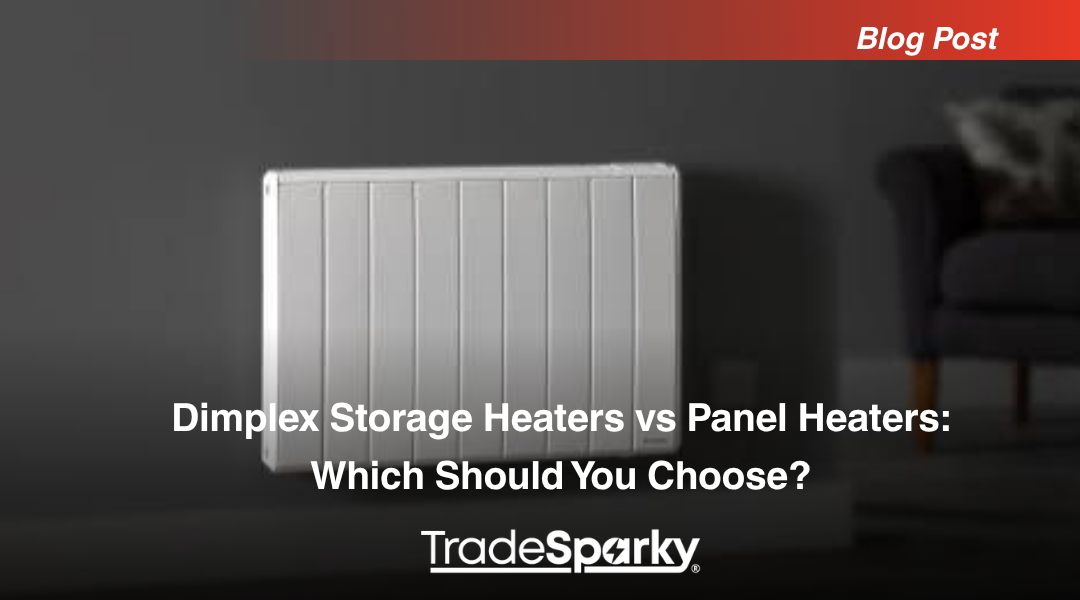
Choosing between a storage heater and a panel heater can have a significant effect on how your home is heated and how much control you have over when that heat is available.
Although both run on electricity, they work in very different ways and are generally suited to different heating requirements.
Dimplex produces both types, making it easier to compare the options within the same established heating brand. The right choice will largely depend on your electricity tariff, how long you need the room heated each day and whether you want stored heat or fast on-demand warmth.
What Is the Difference Between a Storage Heater and a Panel Heater?
The biggest difference is when the electricity is used.
A storage heater draws electricity during designated off-peak periods and converts it into heat, which is retained within the heater before being released as required throughout the following day.
A panel heater is a direct-acting electric heater. It uses electricity at the point when you want heat, allowing the room to warm up relatively quickly without having to charge the heater beforehand.
This fundamental difference means that neither option is automatically better for every property.
How Do Dimplex Storage Heaters Work?
Modern storage heaters are primarily designed for homes with an electricity tariff that provides cheaper power during off-peak periods.
The heater uses this lower-cost electricity to heat internal energy retention cells. Insulation helps keep the heat stored until it is needed, with controls determining when warmth is released into the room.
Dimplex Quantum models take this principle considerably further than traditional night storage heaters. Their controls can automatically calculate how much energy should be stored based on heating requirements, while programmable schedules help determine when that heat is delivered.
High heat retention construction is also designed to reduce the amount of stored warmth escaping before it is required.
How Do Dimplex Panel Heaters Work?
Dimplex panel heaters operate differently because they are direct-acting.
Instead of charging overnight, a panel heater produces heat whenever it is switched on. Most models warm the room predominantly through convection, with thermostatic controls helping maintain the selected temperature.
Their relatively quick response makes panel heaters particularly useful for rooms that do not require continuous heating.
For example, a home office may only need heating during working hours, while a spare bedroom might only be occupied occasionally. In situations such as these, storing a large amount of heat in advance may offer little benefit.
When Is a Storage Heater the Better Choice?
Storage heating tends to make the most sense when the property uses electricity as its principal heating source and has access to a suitable off-peak tariff.
It can be particularly useful in rooms that are occupied for extended periods because the heater can charge using lower-cost electricity and then provide warmth throughout the day.
Modern high heat retention models such as Dimplex Quantum also provide much more control than older storage heaters. Programmable schedules, electronic thermostats and adaptive charging allow the heater to respond more closely to actual heating requirements.
The trade-off is that storage heaters are generally larger, heavier and more expensive to purchase than straightforward direct-acting heaters.
When Is a Panel Heater the Better Choice?
Panel heaters tend to suit rooms where heat is required for shorter or less predictable periods.
Because they produce warmth on demand, there is no need to anticipate heating requirements the night before. Switch the heater on or programme the required heating period and it responds relatively quickly.
This can make panel heaters particularly practical for bedrooms, studies, conservatories and other areas where heating is only required at selected times.
They can also have a lower initial purchase cost than sophisticated high heat retention storage heaters, although they normally use standard-rate electricity while operating.
What About Running Costs?
Running costs are one of the most important differences between the two systems.
A panel heater converts the electricity it consumes directly into heat at the time it operates. The cost therefore depends heavily on the heater's output, how long it runs and the electricity price being paid.
Storage heating can potentially reduce the cost of the electricity used for space heating because much of the energy is purchased during cheaper off-peak periods. However, this advantage depends on having the right electricity tariff and using the heating system appropriately.
If running costs are a major consideration, it is important to compare tariffs as well as heaters rather than judging the system on purchase price alone.
Which Dimplex Heater Should You Choose?
Choose a storage heater if you have a suitable off-peak tariff, require heating for long periods and want to take advantage of lower-cost electricity when the heater charges.
Choose a panel heater if you prefer fast, responsive heating for rooms that are used intermittently or where heating requirements frequently change.
Some properties may benefit from combining both types, using storage heating in regularly occupied living areas and direct-acting heaters in rooms that require more occasional warmth.
Explore the complete range of Dimplex heaters or compare the wider selection of electric heating systems available from Shop4Electrical to find the most suitable solution for your property.









































 Cable & Cable Installations
 Lighting & Lamps
 Wiring Accessories
 Cable Accessories
 Power Distribution
 Heat & Vent
 Energy Controls
 Fire & Security
 Tools & Fixings
 Test Equipment
 Site Equipment & Lighting
 EV Charging
 Solar
Solar


.png)