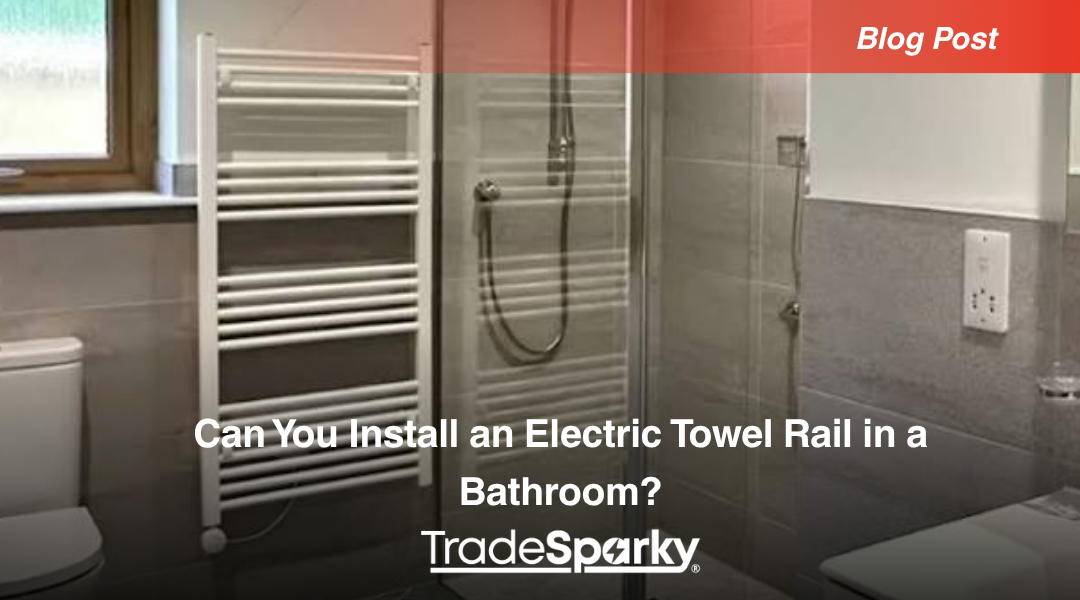
Electric towel rails are designed with bathroom use in mind, but that does not mean any model can simply be installed anywhere in the room.
Bathrooms are classed as special locations because water increases the risk associated with electricity, so the position of the towel rail, its IP rating and the way it is connected all need to be considered carefully.
Understanding the basic bathroom zones and electrical requirements can help you choose a suitable product before installation begins.
Are Electric Towel Rails Safe in Bathrooms?
Yes, provided the towel rail is designed for bathroom use and installed correctly.
Electrical equipment used in bathrooms must be suitable for the conditions it may encounter, including moisture and possible splashing. The product's IP rating is therefore particularly important.
IP stands for Ingress Protection and indicates how well an electrical enclosure is protected against solids and water.
When comparing electric towel rails, you will see ratings such as IP24, IPX4 and IP55 depending on the particular model.
The appropriate rating depends partly on where the appliance will be positioned.
What Are Bathroom Electrical Zones?
Bathroom zones define areas according to how close electrical equipment is to a bath or shower.
Zone 0 is essentially the interior of the bath or shower basin itself. This is the highest-risk area and has particularly strict requirements.
Zone 1 generally covers the area immediately above the bath or shower up to the specified height. Equipment installed here must be specifically suitable for the location and installed in accordance with the manufacturer's instructions.
Zone 2 extends beyond the bath or shower area and is still regarded as an area where splashing is reasonably foreseeable.
Outside these defined zones, the normal electrical rules still apply and equipment must remain suitable for the environmental conditions.
The exact zone boundaries depend on the bathroom layout, particularly in wet rooms or showers without a conventional tray, so they should not be estimated casually.
What IP Rating Does an Electric Towel Rail Need?
For equipment installed in bathroom zones 1 and 2, BS 7671 generally requires a minimum protection against water of IPX4.
Where water jets are likely to be used, a higher level of protection such as IPX5 may be required.
This is why you will commonly see electric towel rails carrying ratings such as IPX4, IP24 or IP55.
The first digit relates to protection against solid objects, while the second digit relates to protection against water. An X simply means that particular aspect has not been given a stated rating.
A higher IP number does not automatically mean a towel rail can be fitted anywhere in a bathroom. The manufacturer's installation instructions and the requirements for the relevant zone still need to be followed.
Can an Electric Towel Rail Be Installed Near a Shower?
Potentially, but the exact location matters.
A suitably rated fixed appliance may be permitted within certain bathroom zones, provided its manufacturer confirms that it is suitable for that position and the installation complies with the wiring regulations.
This is one reason it is better to choose the towel rail first and plan its position around the manufacturer's stated installation requirements rather than buying any model and assuming it can be fitted beside the shower.
The electrical connection and controls also need to be considered, particularly where a controller or isolating device is fitted separately from the towel rail itself.
Does an Electric Towel Rail Need RCD Protection?
Bathroom electrical circuits require additional protection from an RCD.
An RCD monitors the electrical current flowing through a circuit and can disconnect the supply rapidly if it detects current leaking through an unintended path.
This provides an important additional level of protection in locations where water increases the potential consequences of an electrical fault.
RCD protection does not remove the need for correct positioning, an appropriate IP rating or proper installation. All of these measures work together.
Can You Plug an Electric Towel Rail Into a Normal Socket?
Electric towel rails intended for permanent bathroom installation are generally designed to be fixed and connected appropriately rather than simply plugged into an extension lead or ordinary nearby socket.
Standard socket outlets are heavily restricted in bathrooms because of the additional electrical risk.
The exact connection method depends on the appliance and the installation, so the manufacturer's instructions should always be followed.
Extension leads should never be used as a workaround for installing electrical bathroom heating.
Do You Need an Electrician?
For a permanently installed electric towel rail in a bathroom, using a competent electrician is the sensible approach.
Bathrooms are special locations under the wiring regulations and electrical work may also fall within the requirements of Part P of the Building Regulations in England and Wales.
An electrician can confirm the proposed position, check the existing circuit and RCD protection and ensure the appliance is connected in accordance with both BS 7671 and the manufacturer's instructions.
Choosing the Right Electric Towel Rail for a Bathroom
Before buying, check more than the size, colour and wattage.
Look at the product's IP rating, the manufacturer's permitted installation locations and the position of the bath or shower in relation to the available wall space.
Once those requirements have been established, you can then compare output, controls, timer functions and appearance.
Choosing a suitable model first and having it installed correctly gives you the convenience of warm towels and useful bathroom heating without compromising electrical safety.

















































 Cable & Cable Installations
 Lighting & Lamps
 Wiring Accessories
 Cable Accessories
 Power Distribution
 Heat & Vent
 Energy Controls
 Fire & Security
 Tools & Fixings
 Test Equipment
 Site Equipment & Lighting
 EV Charging
 Solar
Solar


.png)